You can bring bold culture and texture into your home by creating an African mask gallery wall that reflects your taste and tells a story. A well-planned display turns masks, baskets, textiles, and pottery into a cohesive, eye-catching focal point that adds warmth and personality to any room.
This article shows ways to mix sizes, regions, and materials so your gallery feels balanced and vibrant. You’ll find simple styling ideas that help you arrange masks with textiles, woven baskets, lighting, and other African art to create a polished, meaningful display.
In this article, we'll cover
- 1. Create a symmetrical gallery with Maasai and Yoruba masks
- 2. Layer African masks with woven baskets
- 3. Use a mix of tribal masks from different regions
- 4. Add bold Mudcloth pillows near the wall display
- 5. Frame masks with natural wood frames
- 6. Pair masks with Kente cloth wall hangings
- 7. Arrange masks above a textured African rug
- 8. Feature a centerpiece Baoule mask surrounded by smaller masks
- 9. Use varied mask sizes for dynamic height variation
- 10. Integrate hand-carved Makonde masks
- 11. Highlight one large Fang mask as a focal point
- 12. Place masks next to African pottery for contrast
- 13. Showcase masks with African textile art
- 14. Mount masks alongside African beaded jewelry displays
- 15. Incorporate vintage Benin bronze mask replicas
- 16. Add warm lighting to emphasize mask textures
- 17. Combine masks with African metal sculptures
- 18. Hang masks on a neutral painted wall for pop
- 19. Create an asymmetrical layout with Bantu and Dogon masks
- 20. Add woven baskets as shelf decor beneath masks
1. Create a symmetrical gallery with Maasai and Yoruba masks
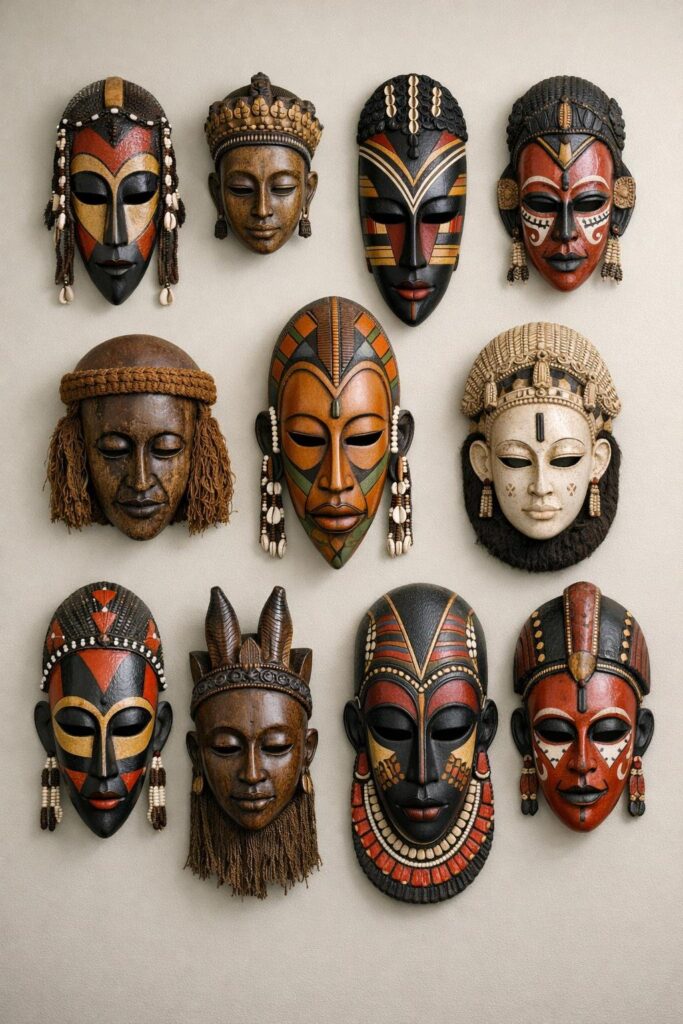
Place Maasai and Yoruba masks in a balanced grid to make your wall feel calm and organized. Match sizes and spacing so each mask gets equal attention.
Mix the Maasai’s tall, elongated forms with Yoruba’s colorful, geometric faces for contrast. Use similar frames or mounts to tie the look together.
2. Layer African masks with woven baskets
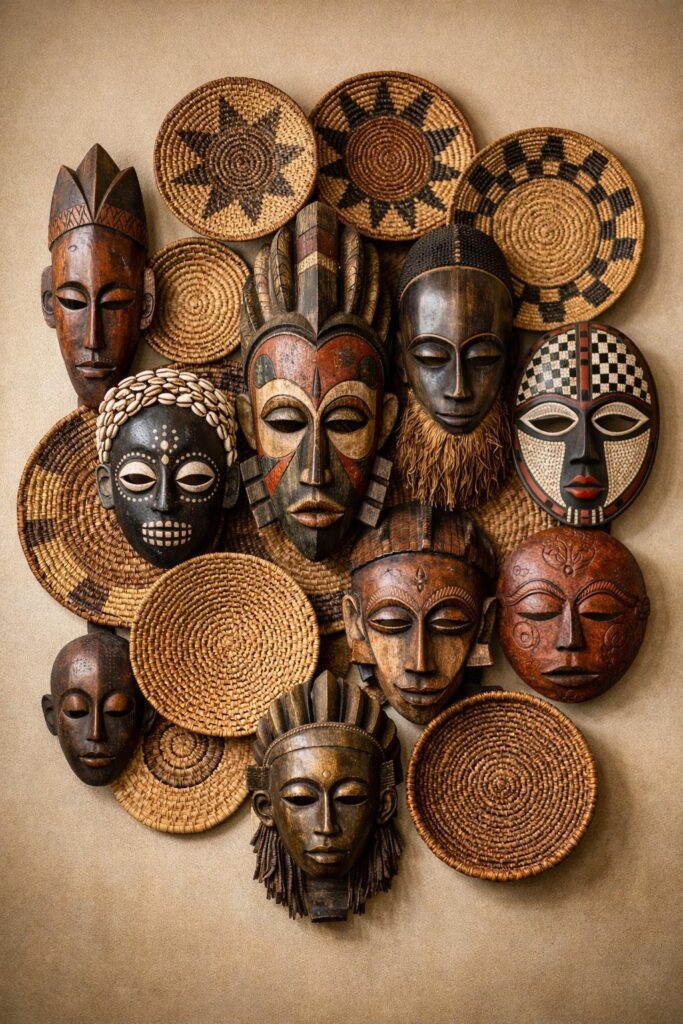
You can mix carved masks and woven baskets on one wall for texture and balance. Place masks as focal points and fill gaps with baskets in different sizes and weaves.
Try a loose grid or an organic cluster so the pieces breathe. Vary heights and materials to keep the display warm and lived-in.
3. Use a mix of tribal masks from different regions
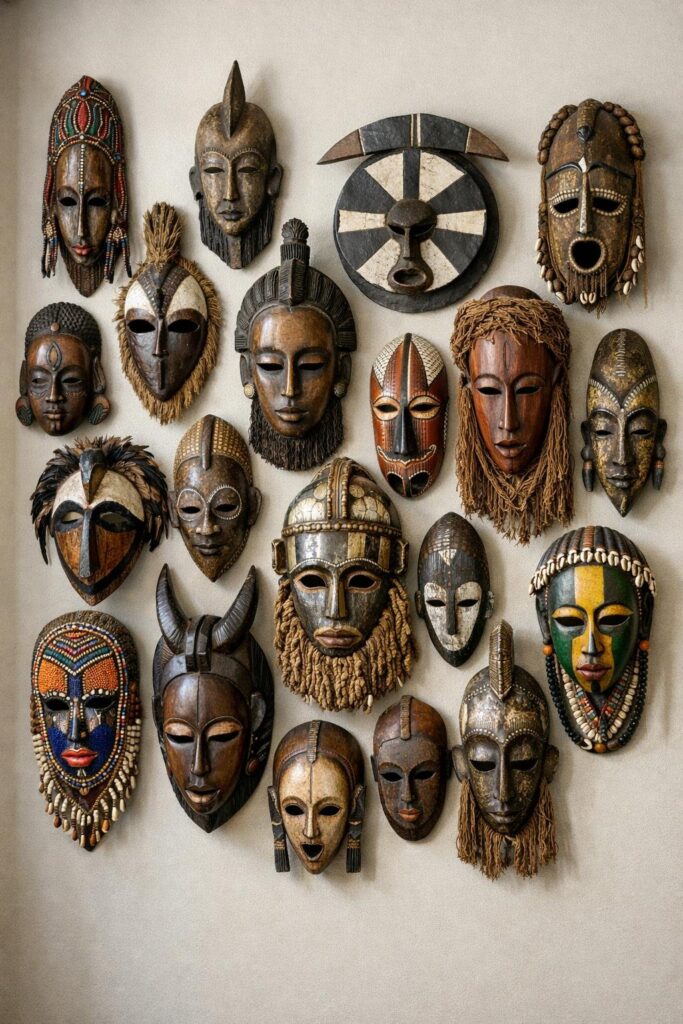
Mix masks from West, Central, East, and Southern Africa to add variety and color to your wall. You can pair bold geometric masks with delicate carved faces for contrast.
Arrange them by size or theme so your display feels balanced. Let each mask keep its own story while creating a lively, shared look.
4. Add bold Mudcloth pillows near the wall display
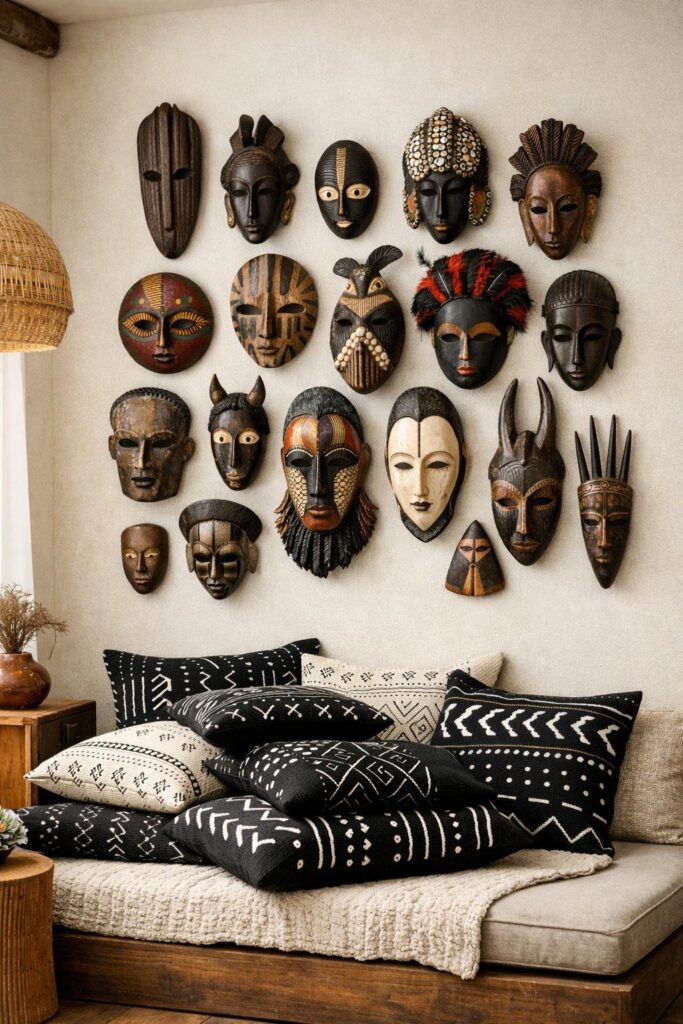
Place a few mudcloth pillows on a nearby bench or sofa to tie the masks to the room. The geometric patterns mirror mask shapes and add a strong visual link.
Choose bold colors or high-contrast black-and-white to keep the focus on the wall. Mix textures so the seating area feels cozy and connected to the gallery.
5. Frame masks with natural wood frames
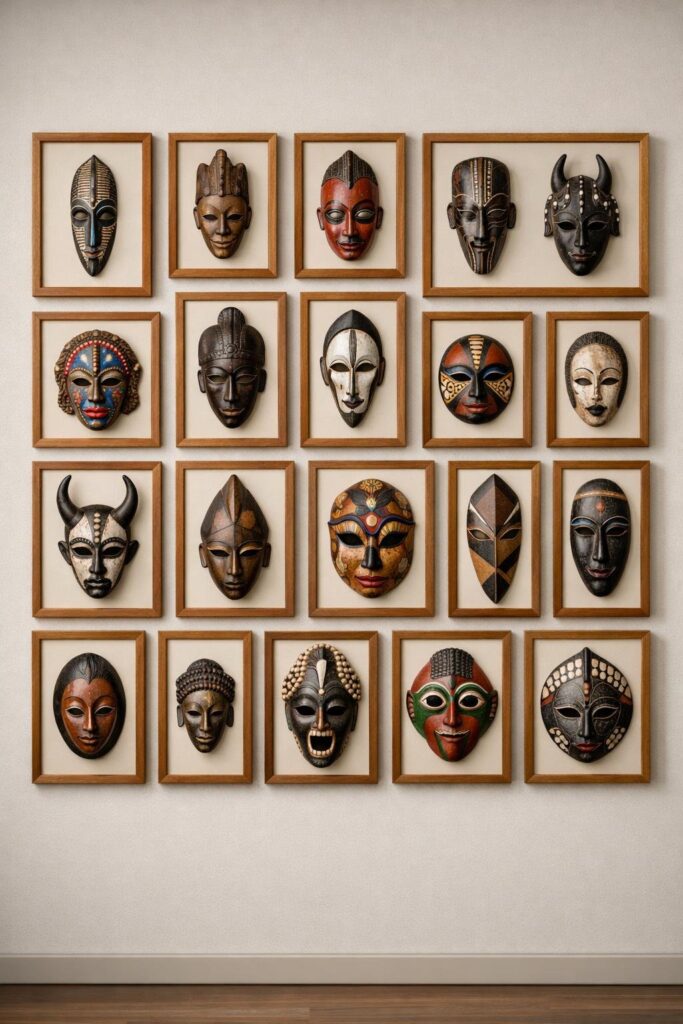
Frame a mask in a simple natural wood frame to highlight its texture and color. This keeps your display warm and grounded while letting the mask stay the main focus.
Mix frame tones to add depth, or match wood grains for a cleaner look. You can hang a framed mask alone or pair it with small prints for a balanced gallery wall.
6. Pair masks with Kente cloth wall hangings
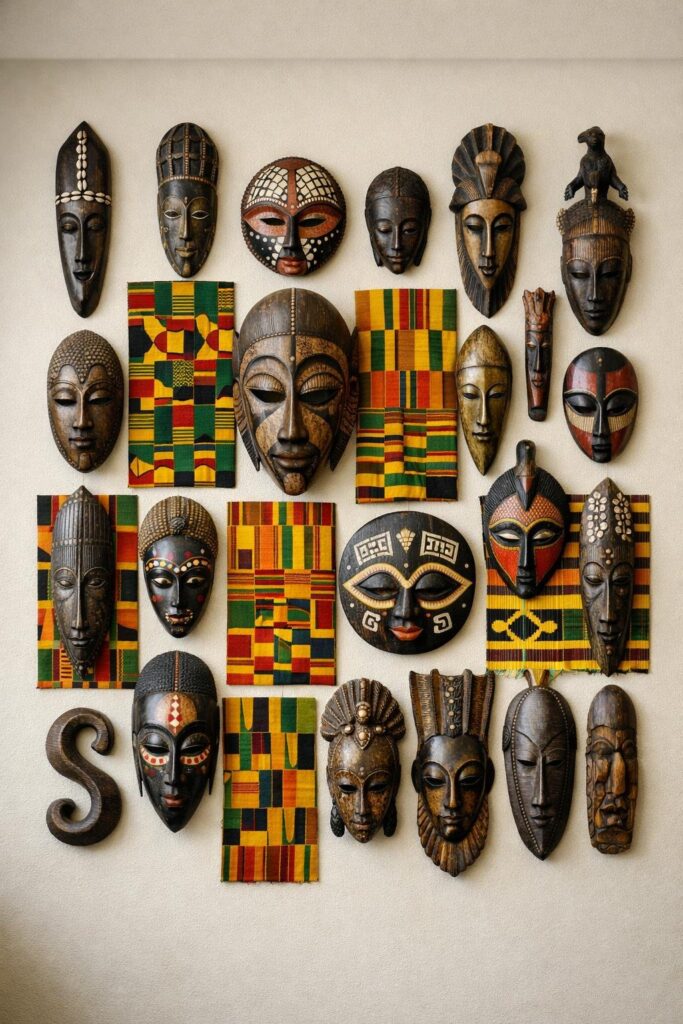
You can hang masks beside bright Kente cloth to add color and texture to your wall. Kente’s bold patterns highlight carved wood and beadwork without overpowering them.
Try a large cloth behind a mask for a layered look, or frame small Kente pieces between masks. Keep colors balanced so your gallery feels lively but not chaotic.
7. Arrange masks above a textured African rug
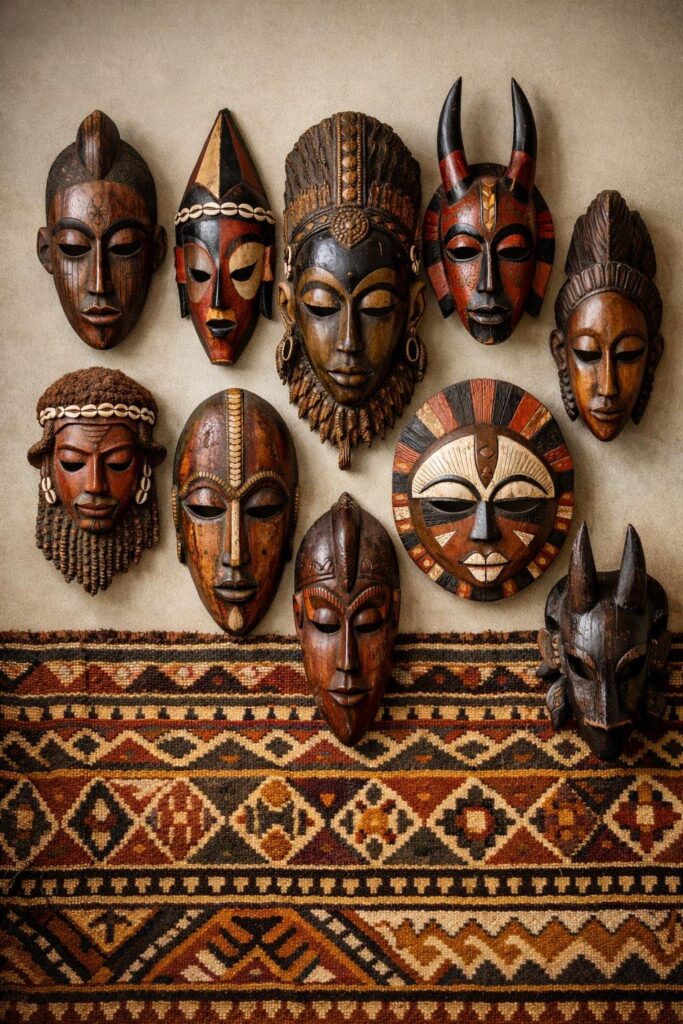
Place a row or cluster of masks on the wall just above a textured African rug to tie the space together. The rug adds color and pattern while the masks bring height and interest.
Keep scale in mind: smaller masks suit narrow rugs, and larger masks fit wider rugs. This combo creates a warm, grounded focal point in your room.
8. Feature a centerpiece Baoule mask surrounded by smaller masks
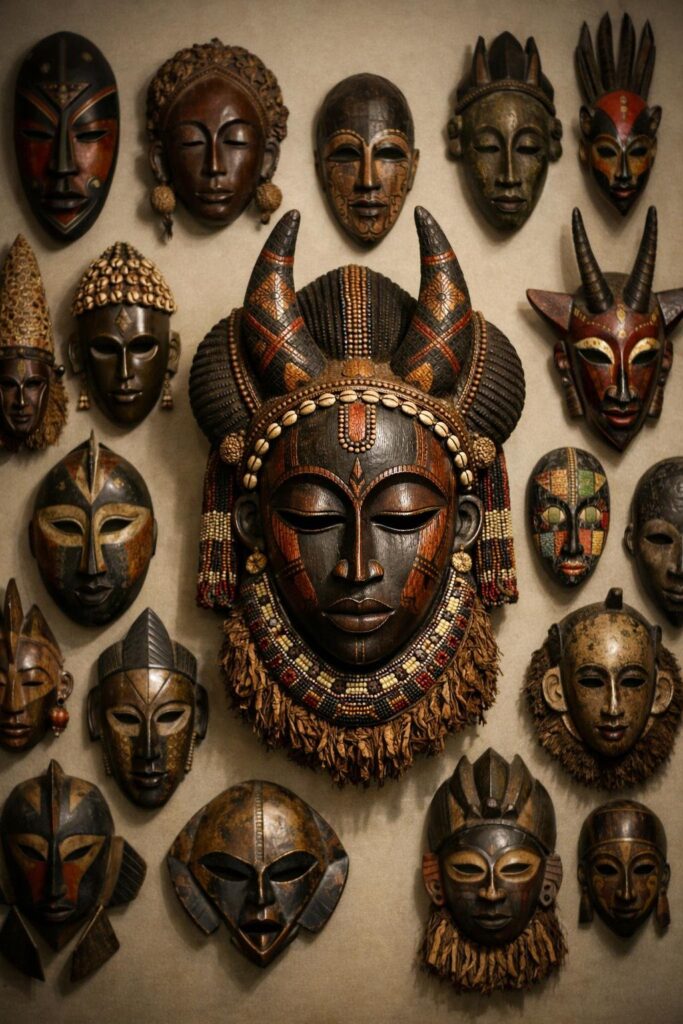
Choose a Baoulé mask as your focal piece to draw the eye. Place smaller masks around it to create balance and rhythm.
Keep spacing even so the centerpiece stands out. Mix shapes and materials for texture, but keep colors that tie the group together.
9. Use varied mask sizes for dynamic height variation
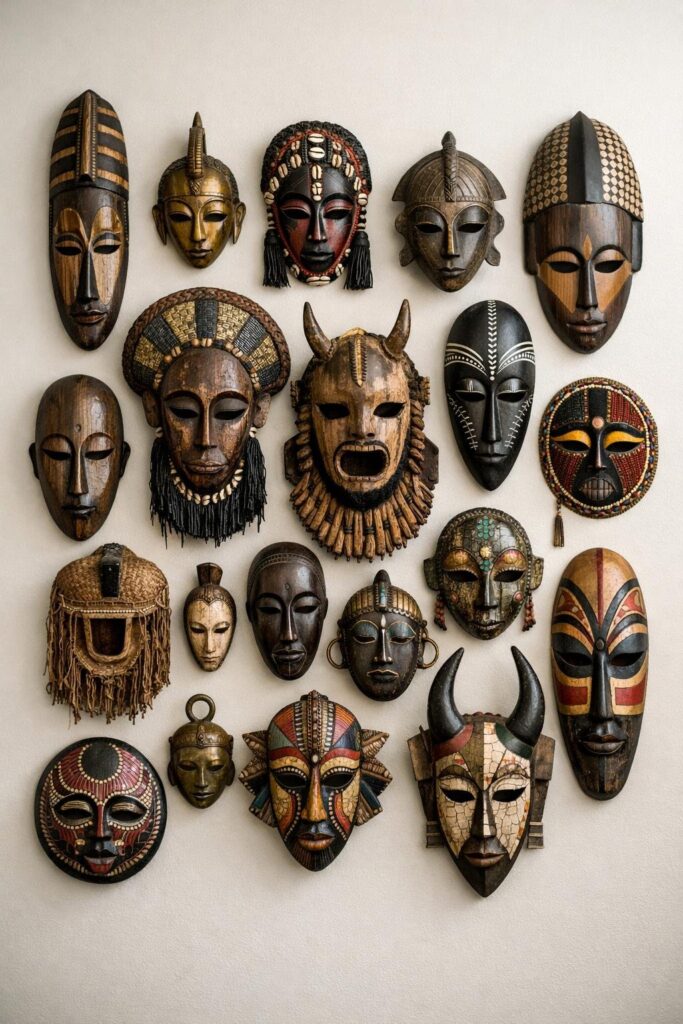
Mix large and small masks to create visual movement across your wall. Place a big mask near smaller ones to make the arrangement feel balanced and active.
Varying sizes helps draw the eye up and down the display. This makes your gallery feel more natural and lively without crowding the space.
10. Integrate hand-carved Makonde masks
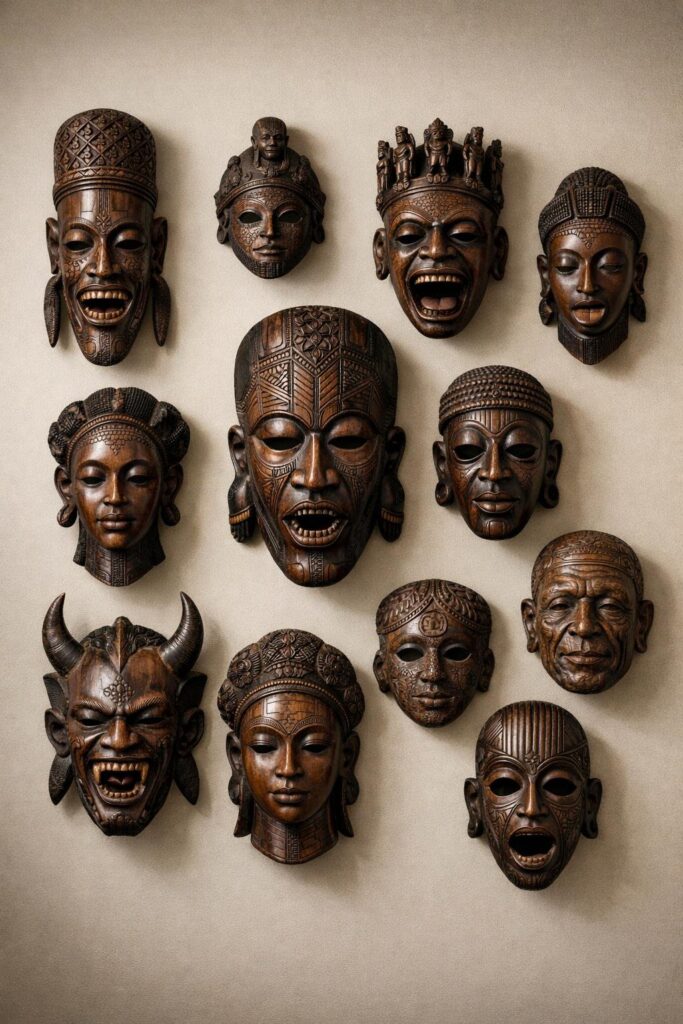
Choose a Makonde mask to add texture and history to your gallery wall. These masks often show fine carving and layered figures, giving your display depth.
Place a single mask as a focal point or cluster smaller pieces with framed prints. Keep spacing balanced so each mask can be seen and appreciated.
11. Highlight one large Fang mask as a focal point
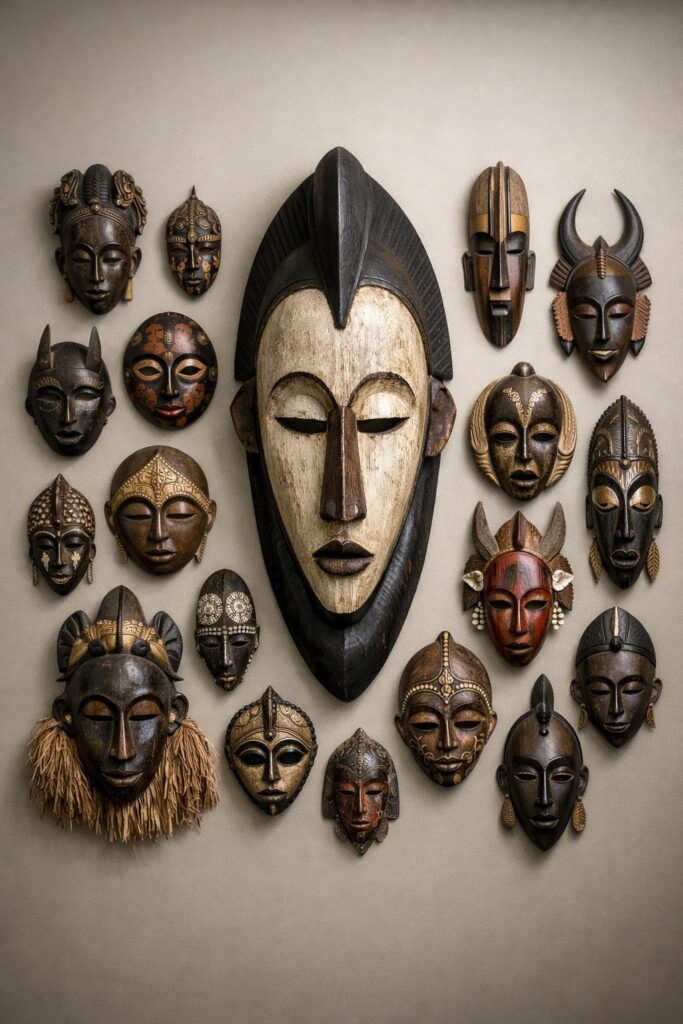
Place a single large Fang mask in the center of your wall to draw the eye. Its strong vertical shape gives your room a clear focal point and a sense of history.
Keep surrounding pieces simple and smaller so the mask stands out. Use even lighting to show texture without glare.
12. Place masks next to African pottery for contrast
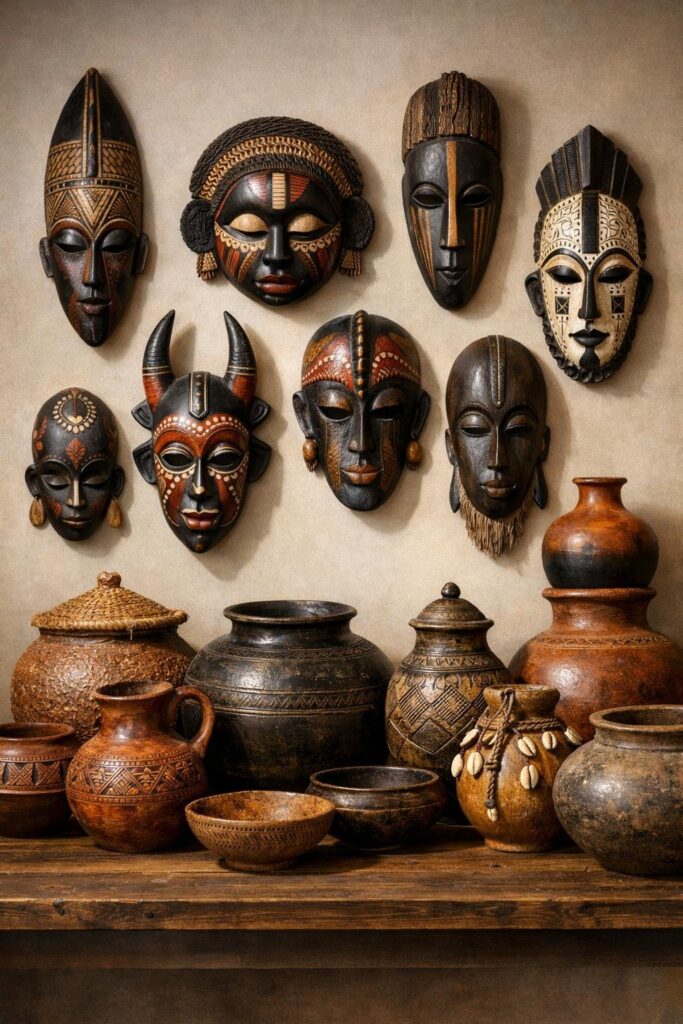
Pairing masks with pottery adds texture and depth to your wall. The smooth curves of pots balance the carved faces of masks.
Try grouping a dark wooden mask beside a lighter clay piece to make both stand out. Vary sizes and heights to keep the display lively and balanced.
13. Showcase masks with African textile art
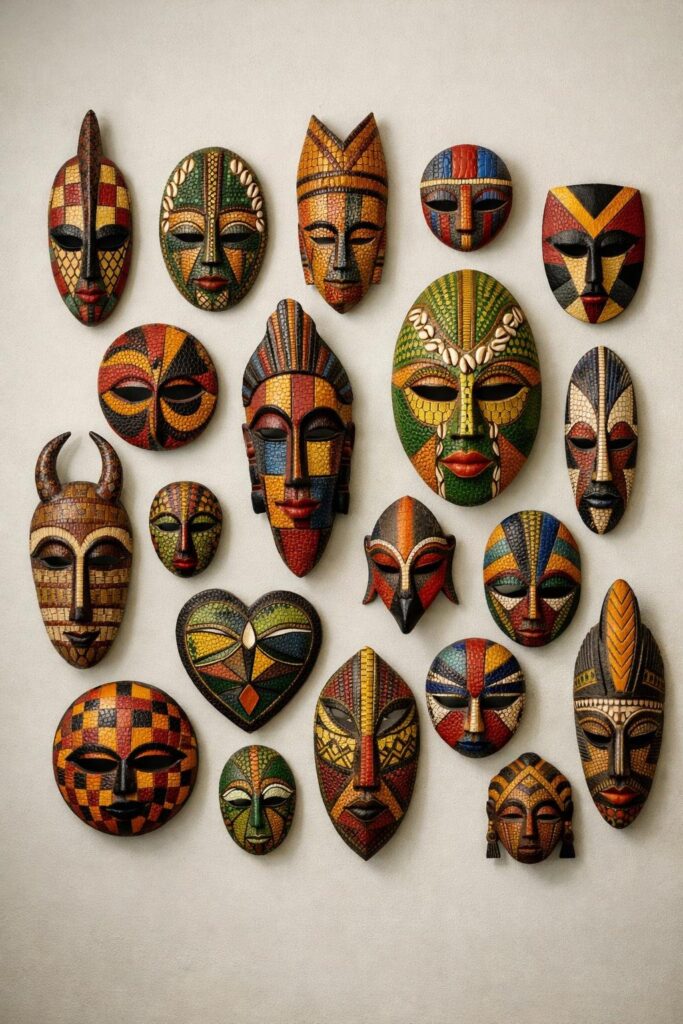
Pair your masks with bold African textiles like kente, mudcloth, or kikoy for rich color and pattern. Place a textile behind a mask or hang small fabric panels nearby to frame each piece.
Mix textures by using woven baskets, printed cloth, and carved wood together. This adds depth and ties the gallery to African craft traditions.
14. Mount masks alongside African beaded jewelry displays
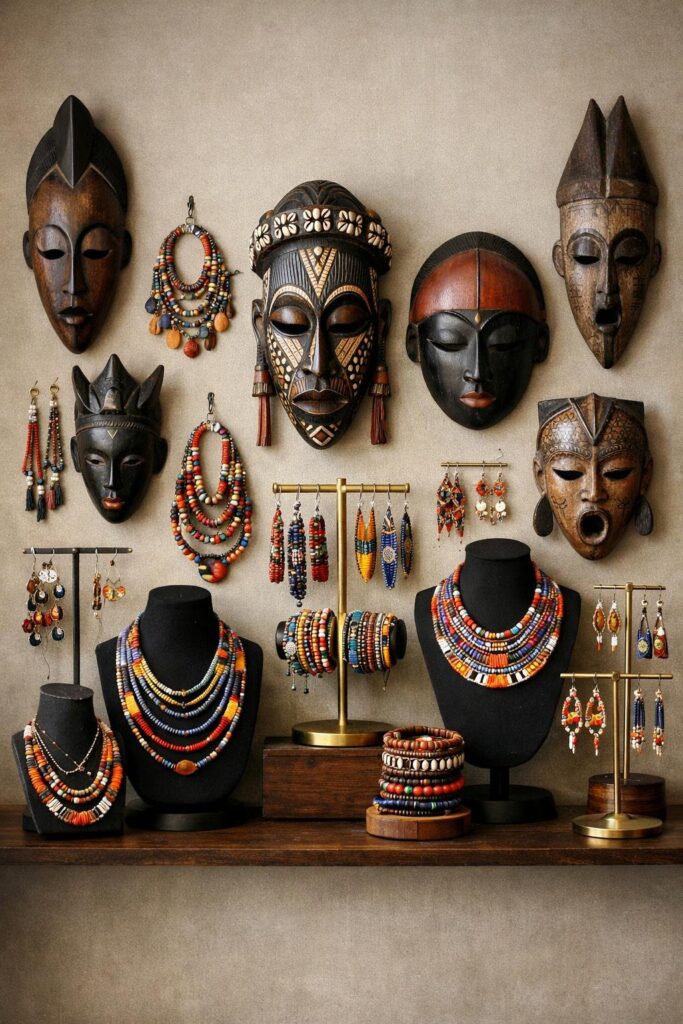
Pair masks with beaded necklaces or belts to add color and texture to your wall. You can hang a mask above a small board that holds strands of beads for a layered look.
Choose beads with colors that echo the mask’s palette. This creates a linked display that feels intentional and vibrant without crowding the space.
15. Incorporate vintage Benin bronze mask replicas

You can add vintage-style Benin bronze mask replicas to bring history and texture to your gallery wall. Place a single replica as a focal piece or group smaller ones for balance.
Keep finishes muted and pair them with warm wood or neutral frames. This helps the pieces feel respectful and grounded in the room.
16. Add warm lighting to emphasize mask textures
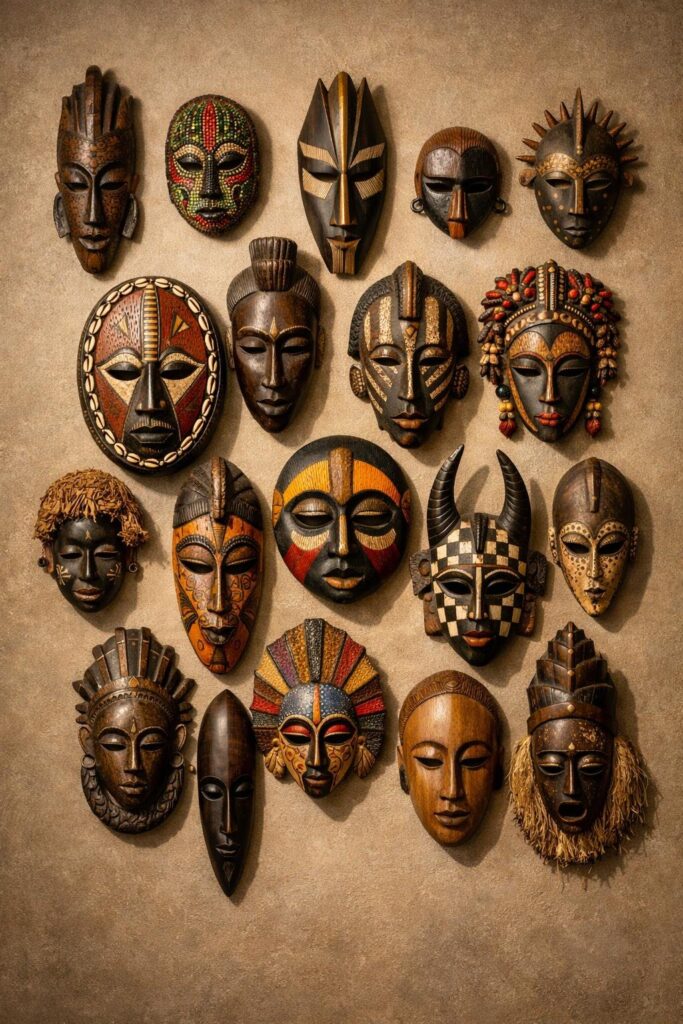
Place warm LED spotlights or wall sconces above or slightly to the side of each mask. This creates soft shadows that reveal carving details and surface texture.
Use dimmers so you can change the mood. Avoid harsh, cool lights that flatten the masks’ depth and color.
17. Combine masks with African metal sculptures
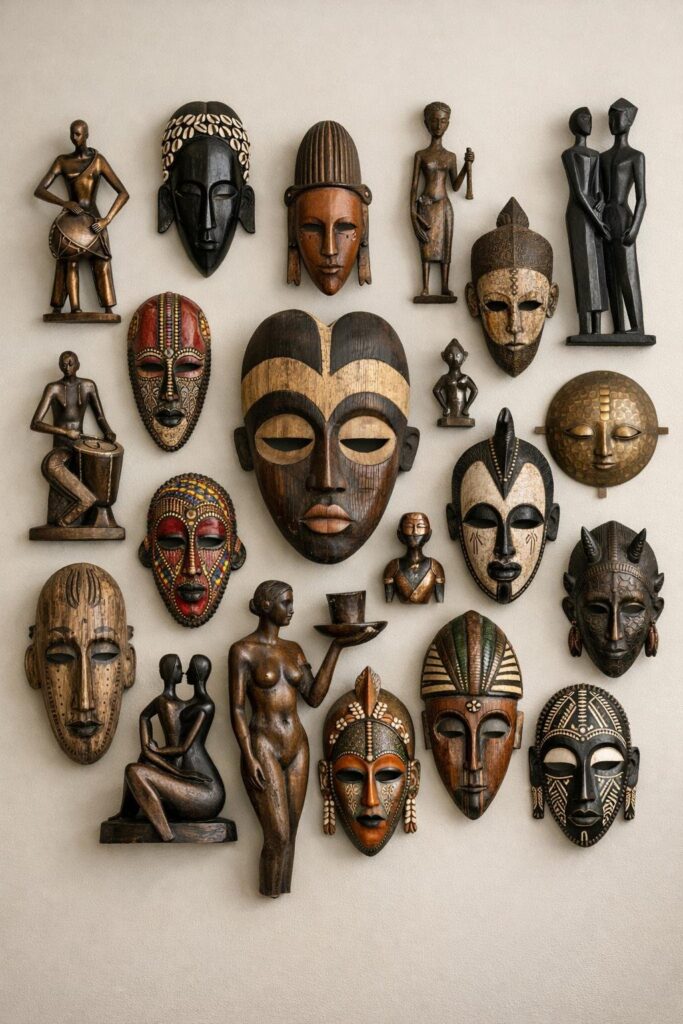
Pair woven or wooden masks with metal sculptures to add shine and contrast to your gallery wall. Place metal pieces beside masks to create balance and catch light in the room.
Mix sizes and heights so your display feels intentional. Keep a consistent color palette to tie the different textures together.
18. Hang masks on a neutral painted wall for pop
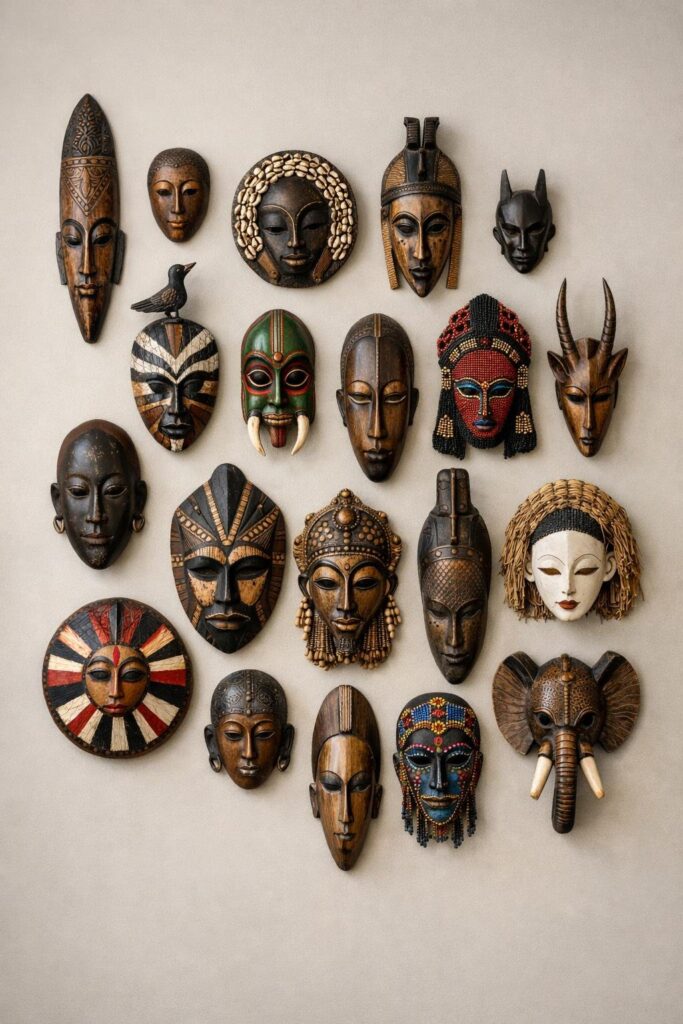
Choose a neutral wall color so your masks stand out without competing with busy patterns. A soft white, warm beige, or pale gray creates a calm backdrop that makes textures and colors pop.
Space masks evenly and leave breathing room around each piece. This simple approach draws the eye and lets each mask show its shape and detail.
19. Create an asymmetrical layout with Bantu and Dogon masks
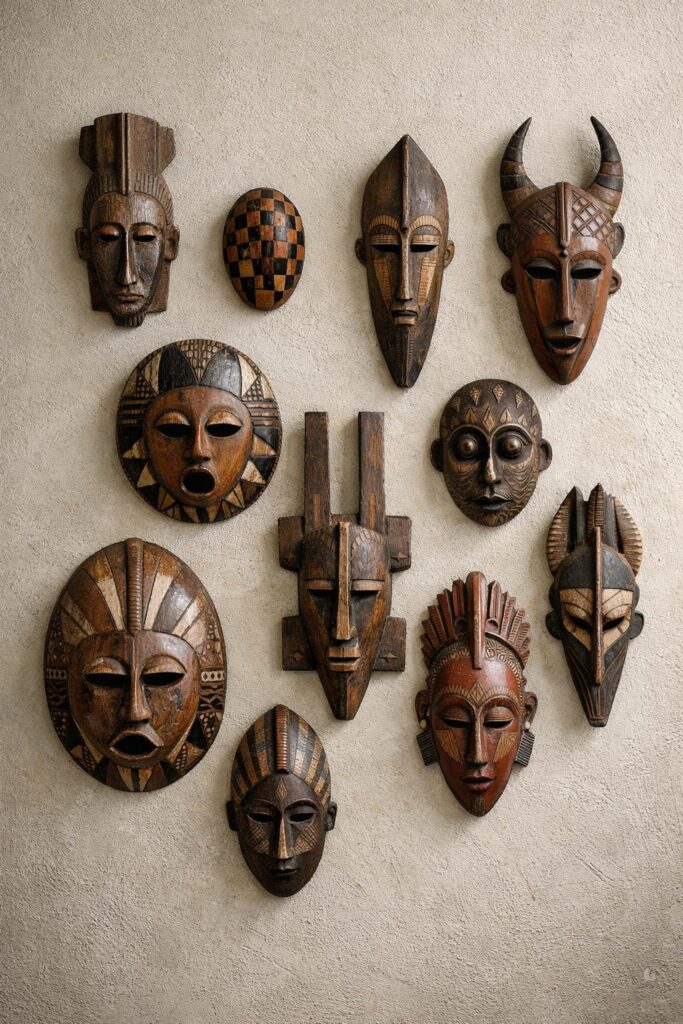
Place a tall Dogon mask off-center to draw the eye, then balance it with smaller Bantu masks clustered nearby. Vary heights and angles to keep the layout lively and unexpected.
Use different textures and wood tones to add depth. Leave some breathing space so each mask can stand out on its own.
20. Add woven baskets as shelf decor beneath masks
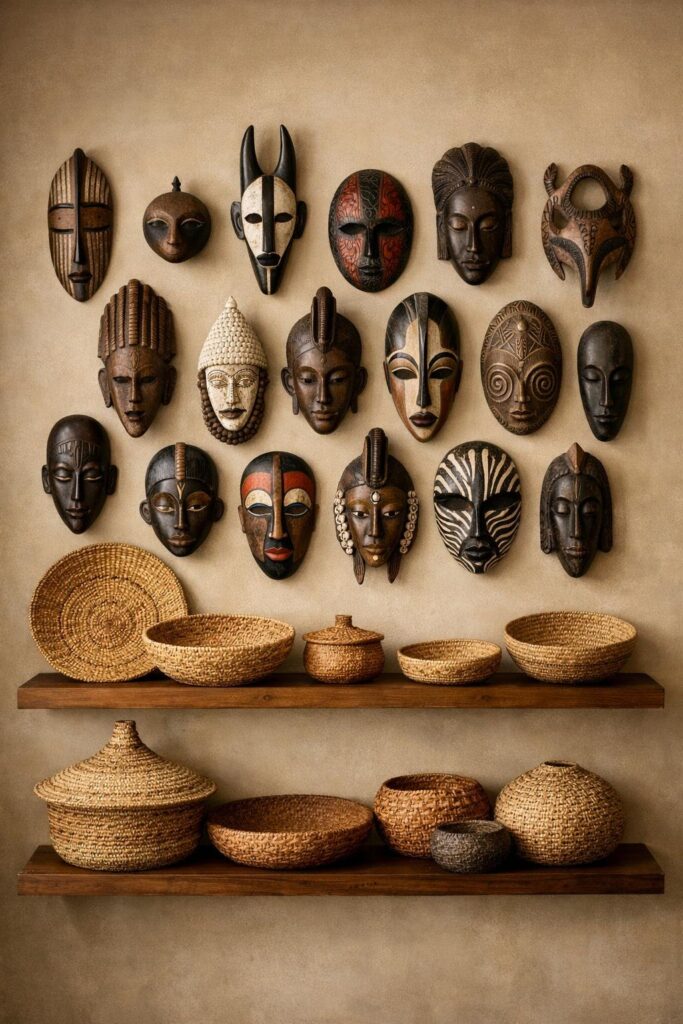
Place woven baskets on a shelf under your masks to add texture and warmth to the wall. You can mix sizes and patterns for a layered look that still feels calm.
Keep colors natural to let the masks stand out, or pick one accent hue to tie the display together. Use baskets that are lightweight and stable so they stay safe on narrow shelves.